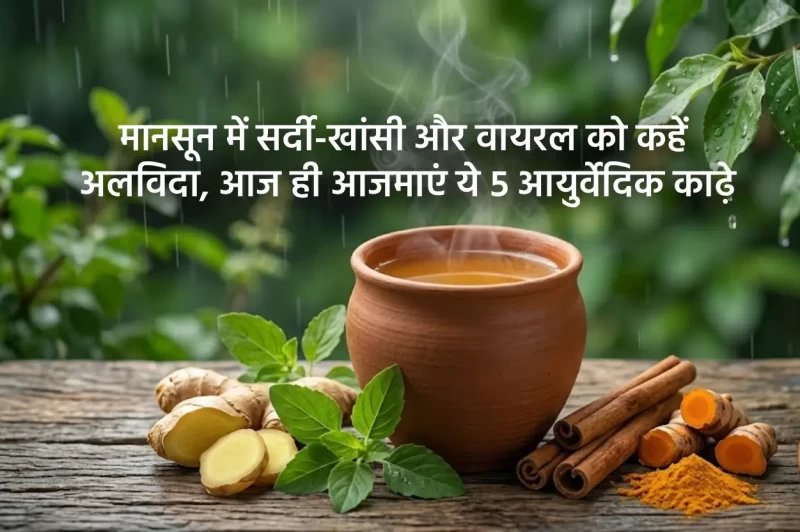
While the arrival of the monsoon brings immense relief from the scorching summer heat and paints nature in vibrant shades of green, it also acts as a breeding ground for various seasonal health issues. The sudden rise in atmospheric humidity allows bacteria and viruses to multiply rapidly, doubling the risk of catching a common cold, persistent cough, viral flu, malaria, or dengue.
In Ayurveda, special emphasis is laid on maintaining a robust immune system during the rainy season (Varsha Ritu). Our ancient sages carefully formulated extraordinary herbal drinks using common kitchen spices and herbs, traditionally known as 'Vedic Tea' or 'Ayurvedic Kadha'.
Let's look at 5 powerful, easy-to-make home remedies that will keep your family safe and healthy throughout this rainy season.
This is a centuries-old, time-tested home remedy that provides immediate relief to your respiratory system.
Ingredients: 8-10 fresh Holy Basil (Tulsi) leaves, 1 inch of crushed ginger, 3-4 freshly crushed black peppercorns, and a small piece of jaggery or raw honey.
Preparation: Add the Tulsi leaves, crushed ginger, and black pepper to a glass of water. Boil it on a medium flame until the water reduces to half. Strain it, let it cool down to a lukewarm temperature, and stir in honey or jaggery.
Benefits: It effectively clears the respiratory tract, thins out stubborn chest congestion, and delivers a quick boost of natural energy.
Giloy is referred to as 'Amrita' (Nectar of Immortality) in Ayurveda because of its exceptional ability to root out chronic fevers and stubborn viral infections.
Ingredients: A 6-inch fresh Giloy stick (stem), 2 cloves, and a small piece of cinnamon.
Preparation: Crush the Giloy stem thoroughly. Boil it in water along with the cloves and cinnamon on a low flame until the liquid reduces to half, then strain it.
Benefits: It helps optimize blood platelet counts, combats persistent seasonal fevers, and works as an excellent natural blood purifier.
Turmeric contains a highly active compound called 'Curcumin', which is an exceptional natural antibiotic and anti-inflammatory agent.
Ingredients: Half a teaspoon of raw turmeric paste (or pure turmeric powder), a pinch of carom seeds (Ajwain), and a small stick of cinnamon.
Preparation: Drop all three ingredients into a cup of water, let it boil vigorously for 5-7 minutes, strain it, and sip it slowly while it's comfortably warm.
Benefits: It provides rapid relief from painful throat infections, soreness, and eases the joint aches that often flare up during damp weather.
If getting caught in a sudden downpour has left you with a hoarse voice or a dry, irritating cough, this soothing tea is exactly what you need.
Ingredients: 1 teaspoon of Licorice (Mulethi) powder or a dried root stick, half a teaspoon of fennel seeds (Saunf), and 2 crushed green cardamoms.
Preparation: Simmer the licorice, fennel seeds, and crushed cardamoms in water for a few minutes. Drink it while it is pleasantly warm.
Benefits: Licorice coats and lubricates an irritated throat, while fennel seeds soothe the digestive lining, preventing the stomach upsets common in this weather.
This refreshing brew is highly effective for flushing out accumulated bodily toxins and shaking off seasonal lethargy.
Ingredients: Freshly chopped lemongrass stalks, 7-8 fresh mint leaves, and the juice of half a lemon.
Preparation: Gently boil the lemongrass and mint leaves together in water. Strain the liquid into a cup and stir in the fresh lemon juice just before drinking.
Benefits: It gives a massive boost to slow monsoon digestion, instantly drives away midday sluggishness, and cleanses the skin from within.
Limit the Quantity: Because traditional Ayurvedic herbs possess potent, warming properties, avoid drinking large quantities. Sticking to half a cup once or twice a day is more than enough.
Avoid an Empty Stomach: Consuming these concentrated herbal extractions on a completely empty stomach can occasionally trigger acidity or heartburn. It is best enjoyed after breakfast or as a healthy substitute for your evening tea.
The Golden Rule for Honey: Never add honey into boiling hot liquids, as high heat alters its properties and destroys its natural enzymes. Always wait for your herbal tea to cool down to a warm temperature before mixing it in.
Instead of immediately popping heavy over-the-counter pills and synthetic antibiotics at the first sign of a sniffle, turning to these highly effective remedies hidden right inside your kitchen is a game-changer. These traditional 'Vedic Teas' will not only act as a shield against seasonal flu but will also profoundly strengthen your body from the inside out. Switch out your regular milk tea for these healthy alternatives this season and stay protected!