New Delhi: In Hinduism, death is not considered an end but the beginning of a new chapter. In the Gita, Lord Krishna says that just as a person discards old clothes to wear new ones, the soul leaves the old body to inhabit a new one. But what is the period like between leaving the body and taking a new birth?
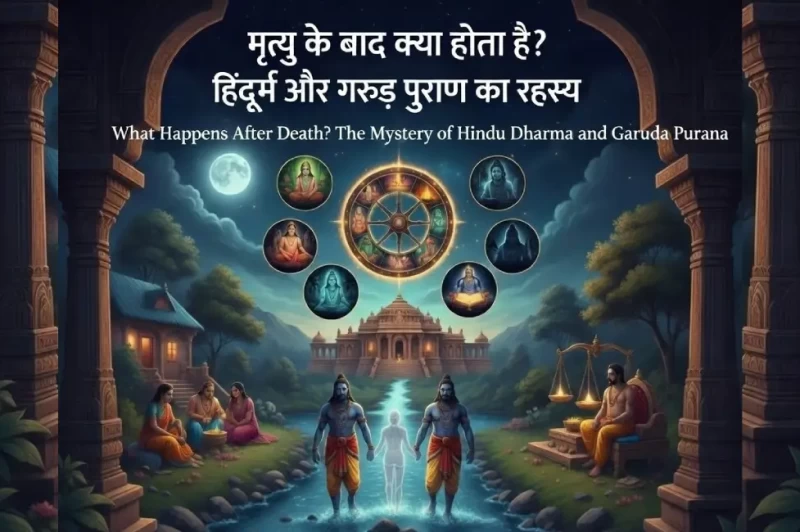
It is believed that when a person’s final moments arrive, they begin to see two messengers of Yamraj (Yamadutas). For those who have performed good deeds throughout their lives, the life force (Prana) exits easily; however, those entangled in worldly attachments and illusions experience pain. After leaving the physical body, the soul enters a thumb-sized subtle body known as the Preta Sharira.
According to the Garuda Purana, immediately after death, the Yamadutas take the soul to Yamloka, where a record of their deeds (maintained by Chitragupta) is shown. Afterward, the soul is returned to its home, where it remains among its family members for 13 days. This is why the 'Terahvin' (13th-day ceremony) holds special significance in Hinduism.
After 13 days, the soul begins its journey back to Yamloka. This path requires crossing 16 cities. In the middle lies the Vaitarani River, which is filled with pus, blood, and filth. According to mythological legends, a person who has performed Gau Dan (donation of a cow) in their lifetime crosses this river easily, while a sinful person suffers within it.
Upon reaching the court of Yamraj, the soul is assigned one of three paths based on its deeds:
Devaloka (Heaven): Those who have performed great virtuous acts and showed immense devotion to the deities find a place here.
Pitriloka: Those who did good deeds but did not attain salvation (Moksha) enjoy happiness here before being reborn.
Naraka (Hell): Those who committed grave sins are sent to various hells to face different forms of torment.
The ultimate goal of Hinduism is 'Moksha'. If the soul merges with the Supreme Consciousness (Paramatma), it does not have to return to this mortal world. This is considered the absolute truth of life.