While the arrival of the monsoon brings welcome relief from the summer heat, it also brings a rise in digestive issues, seasonal flu, and stomach infections. According to both Ayurveda and modern science, human digestive fire (Agni) weakens during the rainy season and the holy month of Sawan.
To keep your gut healthy and boost immunity during the rainy months, here are the essential Monsoon Diet Rules to follow.
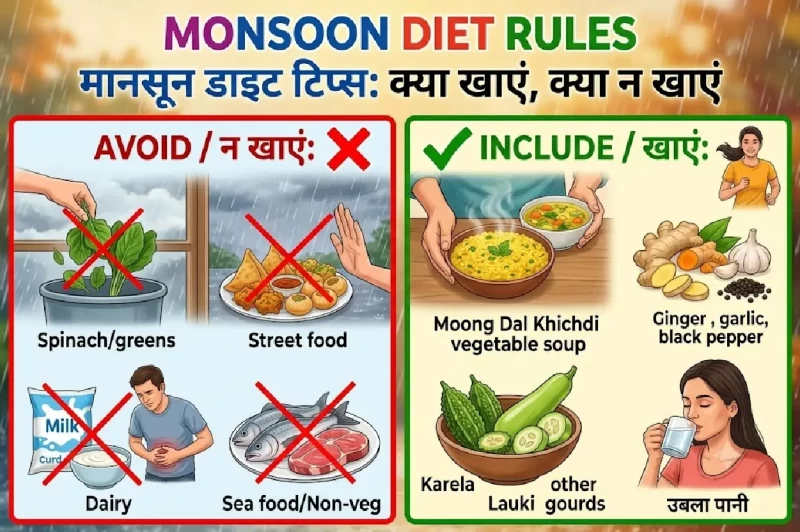
Leafy Green Vegetables: Greens like spinach, cabbage, and fenugreek tend to trap moisture and become breeding grounds for bacteria and tiny pests during monsoon.
Dairy Products & Curd: In Ayurveda, milk and curd consumption during Sawan is discouraged as it aggravates Vata dosha and leads to sluggish digestion.
Street Food & Deep-Fried Snacks: Open street food, Pani Puri, and fried snacks often use contaminated water or reused oil, high in risk for food poisoning.
Sea Food & Non-Veg Items: Monsoon is the breeding season for marine life. Consuming non-vegetarian food during this time increases the risk of severe waterborne infections.
Stale or Leftover Food: High humidity accelerates bacterial growth in cooked food. Always consume freshly prepared hot meals.
Light & Easily Digestible Meals: Opt for Moong Dal Khichdi, oats, vegetable soups, and steamed gourds (Lauki).
Immunity-Boosting Spices: Incorporate ginger, turmeric, black pepper, asafoetida (Hing), and garlic into your cooking to stimulate digestion.
Bitter Vegetables: Vegetables like bitter gourd (Karela) help purify the blood and prevent skin infections.
Boiled Drinking Water: Waterborne diseases spike in monsoon; drinking boiled or filtered water is essential.
The dietary guidelines laid down in our traditional customs for Sawan align perfectly with modern nutritional science. By making simple tweaks to your daily diet, you can enjoy the rains healthily without falling sick!