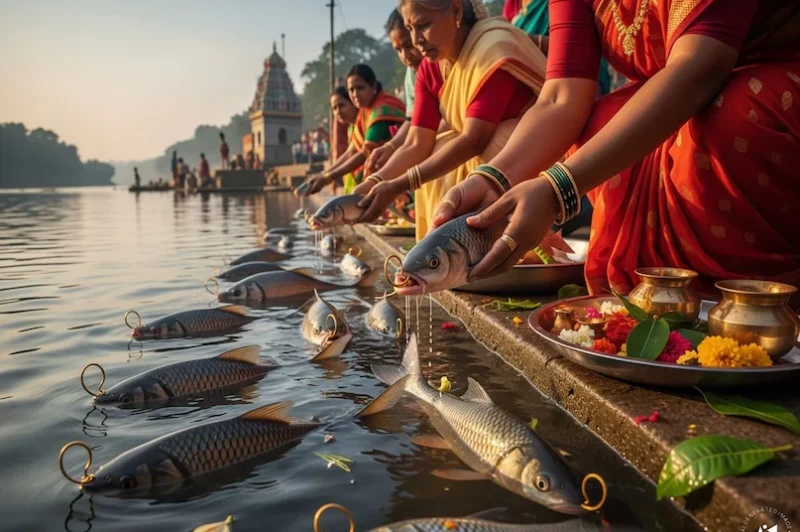
Chikkamagaluru, Karnataka: India is globally renowned for its diverse culture and extraordinary religious traditions. While worshipping stones or animals is common, did you know there is a temple in the Chikkamagaluru district of Karnataka where fish living in the river are worshipped as deities? Even more fascinating is the centuries-old tradition of adorning these fish with gold or silver nose rings (Nath) upon the fulfillment of a devotee's wish.
This unique tradition is observed on the banks of the Tunga River, flowing near the world-famous Sharda Peetham in Shringeri. This spot is also known as 'Matsya Tirtha' (The Holy Fish Site).
God’s Fish: Thousands of fish (locally known as 'Meen') reside at the river ghats here. Devotees believe these fish are the divine protectors of Goddess Sharadamba and carry a celestial essence.
The Nose Ring Ritual: The most striking aspect of this tradition is that when a devotee's special prayer is answered, they catch a fish as a gesture of gratitude, gently pierce its nose with a small gold or silver ring, and release it safely back into the river.
It is believed that offering jewelry to the fish is a way to please the Goddess.
Vows and Corn: People often pray for health, children, or success in business. Once their wish is granted, besides the nose ring ritual, there is a tradition of feeding the fish corn and rice grains.
A Message of Non-Violence: Fishing or consuming these fish is strictly prohibited. They are considered 'Deva Matsya' (Divine Fish), and both locals and the administration ensure their complete protection.
Tourists visiting Shringeri often spend hours by the riverside trying to spot these "jeweled fish." When these fish swim in the crystal-clear water, the glint of the sunlight on their nose rings creates a magical and mesmerizing sight.
The Legacy of Adi Shankaracharya: It is said that witnessing the purity of this location, Adi Shankaracharya established his first monastery (Matha) here. He preached the message of respect for nature and all living beings—a philosophy that lives on today through this unique ritual.