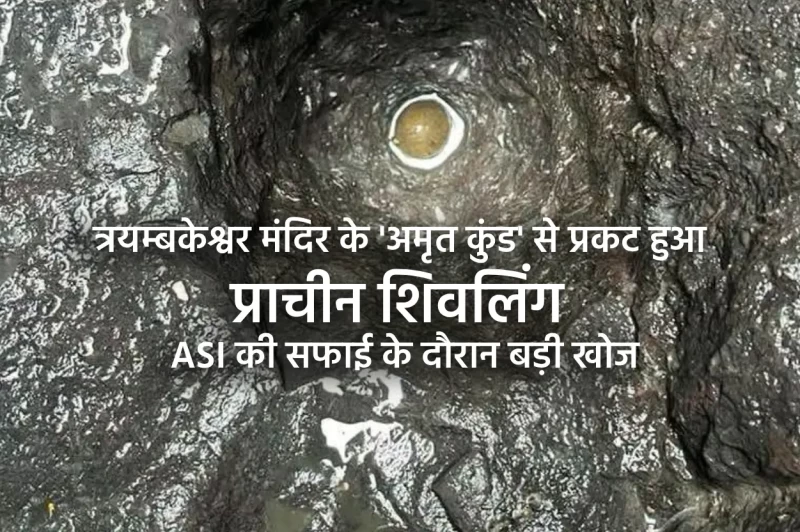
Nashik: A magnificent new chapter has been added to India’s deep and mystical history. During ongoing restoration and conservation work by the Archaeological Survey of India (ASI) at the historic Trimbakeshwar Jyotirlinga Temple in Nashik, a remarkable discovery has come to light. An ancient stone Shivalinga was unearthed from the bottom of the temple's historic water tank, locally revered as the Amrit Kund.
This extraordinary find has sparked immense excitement not only among archaeologists and historians but also among millions of Shiva devotees.
The ASI conservation team had been meticulously working on rejuvenating the Amrit Kund to restore its pristine historical glory. Over decades, a massive amount of silt, mud, and debris had accumulated at the bottom of the tank.
As the workers and excavation experts reached the deepest bed of the tank during the desilting process, they spotted the structured stone structure buried beneath the debris. Carefully clearing away the layers of mud, the team safely recovered the beautifully carved stone Shivalinga, perfectly intact. For the local community and priests, this unexpected revelation was nothing short of a divine and deeply emotional moment.
The Trimbakeshwar Temple is centuries old and holds a unique place in Hindu institutional worship, representing the confluence of the three supreme energies—Brahma, Vishnu, and Mahesh. The adjacent Amrit Kund carries its own sacred legacy.
Archaeological experts suggest two vital takeaways from this event:
Ritualistic Continuity: The presence of the Shivalinga at the very bottom indicates that in ancient times, this historic tank was likely used not just for holy bathing, but also for elaborate water-ablation (Jal-Abhishek) rituals.
Natural Preservation: Being completely submerged under layers of silt protected the stone from harsh weather conditions and human interference, preserving its pristine architectural details for generations.
This discovery stands as a shining testament to why scientific conservation of our national heritage is so critical. While historic sites are often viewed merely through the lens of tourism, disciplined conservation drives often unearth hidden secrets of our past that would otherwise be lost to time.
ASI officials have indicated that further analysis is underway to determine the exact era and historical timeline of the recovered Shivalinga. Meanwhile, a profound sense of devotion and curiosity fills the air in Trimbakeshwar as pilgrims gather to catch a glimpse of this sacred piece of history.
Har Har Mahadev! 🪔🙏