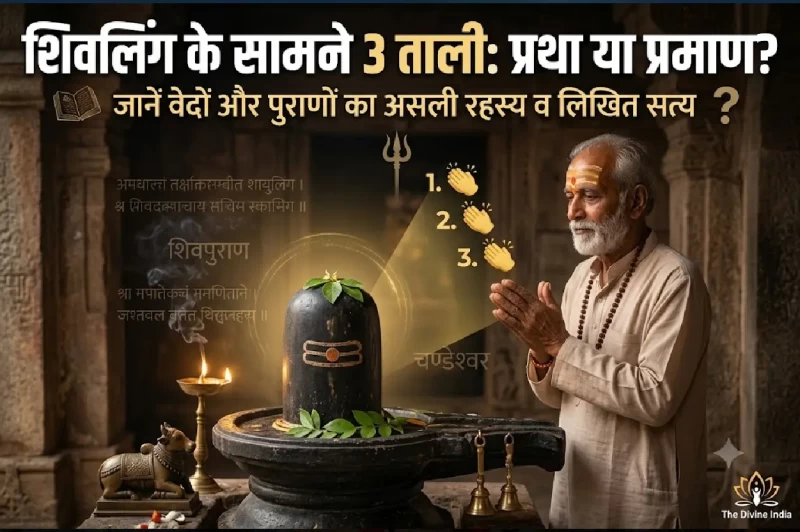
In almost every Shiva temple across India, it is a common sight to witness devotees clapping three times in front of the Shivling or near Nandi.
While widely practiced, the question arises: Is this ritual explicitly commanded in the Vedas, Upanishads, or the Shiva Maha Purana? Or is it a cultural tradition passed down orally through generations?
Let us delve into what the ancient texts, Agama traditions, and temple etiquettes actually say about this practice.
In core Vedic literature (Rigveda, Yajurveda, Samaveda, Atharvaveda) and classical Puranas like the Shiva Purana, there is no mandatory verse prescribing three claps during solitary worship of the Shivling.
Vedic worship of Lord Shiva places supreme emphasis on:
Mantra Japa (Chanting names like Om Namah Shivaya)
Abhisheka (Sacred libation)
Dhyana and Mauna (Meditative silence)
The origin of clapping three times stems from three specific cultural and Agama traditions:
It is believed that Ravana, an ardent devotee of Shiva, sang the Shiva Tandava Stotram and clapped rhythmically to appease Mahadev while lifting Mount Kailash, symbolizing devotion across the three realms (Swarga, Martya, Patala).
In Shaivite Agama scriptures, Chandeshwar is revered as the divine caretaker of Shiva’s Nirmalya (offerings).
When leaving the temple, devotees softly clap or dust their hands three times to indicate: "O Chandeshwar, I am not knowingly or unknowingly carrying any consecrated temple property or offering back with me."
In traditional belief, the three claps represent:
First Clap: Acknowledging one's presence and seeking liberation from threefold miseries (Tritapa - physical, divine, and material).
Second Clap: Asking for pure devotion and righteous wisdom.
Third Clap: Praying for ultimate liberation (Moksha).
According to temple discipline (Mandir Maryada):
Lord Shiva is revered in deep meditation (Dhyanastha). Loud noises, shouting, or aggressive clapping directly next to the sanctum sanctorum can disturb the peaceful sanctity of the temple.
Clapping is encouraged during Aarti and collective Kirtan, but personal prayers at the Shivling are best conducted with quiet surrender and humility.
Clapping three times near the Shivling is not a strict Vedic obligation, but an Agamic symbol of detachment, humility, and seeking blessings. If you practice it, do so gently and with a heart full of reverence.