Hinduism has many small rituals that play a vital role in purifying and spiritualizing life. One of these is Achaman. Achaman is not just a simple act of sipping water, but also a means of purifying the soul, calming the mind, and connecting with the deities. But the question is, why perform Achaman? The answer lies in the Vedas, Puranas, and scriptures. In this article, we will discuss the significance, method, and benefits of Achaman in detail.
Achaman is derived from the Sanskrit words 'a' (around) and 'chaman' (bath or purification), meaning 'bathing or purification with pure water.' In simple terms, Achaman is a process in which a person takes a little water in the right palm and sips it between the index, ring, and little fingers, while chanting mantras. This practice is primarily performed at the beginning of puja, yajna, tarpan, or any religious ritual.
According to the scriptures, there is a scriptural requirement to perform achamana three times at the beginning of every religious activity and during Sadhyopasana combined with special pujas. Manusmriti and other texts describe it as a symbol of self-purification.
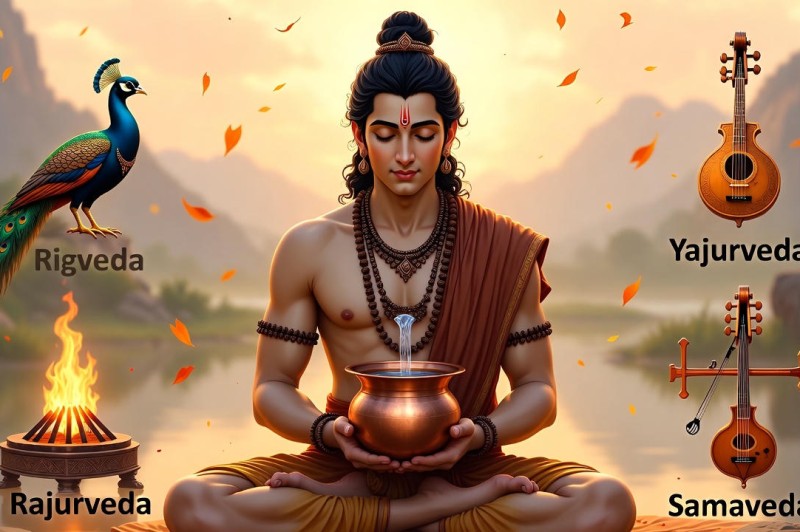
In Hindu scriptures, achamana is considered extremely sacred. The scriptures state that sipping water three times fulfills all desires by reciting the three Vedas—Rigveda, Yajurveda, and Samaveda.
The Atharva Veda also describes achamana as a means of curing diseases and increasing longevity. According to the Puranas, Lord Vishnu himself taught the method of achamana, which has been passed down to the Kalki Avatar. The Mahabharata also mentions Yudhishthira attaining purification through achamana.
Thus, achamana is not merely a drinking of water, but a process of assimilating the three Vedas. It frees one from negative energy and fills one with positivity.
Performing achamana is very simple, but it is essential to perform it properly. Follow these steps:
Preparation: Sit in a clean place. Wash your right hand. Take a copper or silver vessel filled with pure water. It is best to add basil leaves or Ganga water to the water.
First achamana (for the Rig Veda):
Second Achamana (for Yajurveda):
Third Achamana (for Samaveda):
Note: Always perform Achamana while facing south. Women and children can also perform it, but women during menstruation should avoid it.
Benefits of Achamana: Physical, Mental, and Spiritual
Modern science also supports this—minerals dissolved in water keep the body hydrated, while chanting mantras balances brainwaves.
In today's fast-paced life, a simple practice like achamana connects us to our roots. It is not only a part of religious rituals but can also be adopted in daily life. By performing achamana three times, we invoke the power of the Vedas, which helps fulfill our desires.
So start today—perform achamana before every puja or meal. Remember, small rituals bring about big changes. If you want to learn the method of achamana, seek guidance from a learned pandit.
Jai Shri Ram!
(This article is based on Hindu scriptures and traditions. Consult personal beliefs and expert advice before adopting any religious practice.)