Located near Karaikudi in the Sivaganga district of Tamil Nadu, the Arulmigu Karpaka Vinayakar Temple in Pillayarpatti stands as one of the oldest and most revered rock-cut cave temples in India. Dating back over 1,600 years, this sacred shrine holds immense spiritual and historical significance. Publishing its profound legacy on Vinayaka Chaturthi is highly auspicious for your global readership.
While Lord Ganesha is traditionally depicted with four arms (Chaturbhuj) and a left-turning trunk, the main deity at Pillayarpatti exhibits a highly rare and specific iconographical form:
Two Arms: The majestic 6-foot idol is carved with only two arms, representing an early, primordial form of Ganesha worship.
Right-Turning Trunk (Valampuri): His trunk turns toward His right side, classifying Him as a Valampuri Vinayakar. In Vedic traditions, Valampuri idols are believed to be highly vibrant, spiritually active, and quick to bestow blessings upon devotees.
The Mudra: He holds a sweet modak (laddu) in His right hand, while His left hand rests gracefully on His hip (kati). The entire structure is carved directly into the living granite rock of the cave.
The temple is a magnificent specimen of early Pandya and Pallava rock-cut architecture:
Ancient Inscriptions: Epigraphical evidence and archaic Brahmi inscriptions found within the cave complex date the primary rock carvings between the 4th and 5th centuries AD. This makes it one of the earliest known rock-cut cave temples in Tamil Nadu.
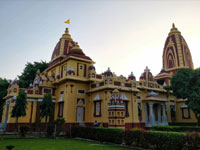
Architectural Harmony: While the core sanctum is housed inside a primal cave, the outer structures reflect the spectacular regal aesthetics of later dynastic additions and Chettinad-style architectural flourishes, complete with massive pillars and an imposing Rajagopuram.
The presiding deity is named 'Karpaka Vinayakar' after the mythical 'Karpaka Vriksha' (Kalpavriksha)—the divine, wish-fulfilling tree of the heavens. It is a deep-seated belief among pilgrims that anyone who offers sincere prayers at this shrine will have their obstacles cleared and their righteous wishes fulfilled, just as if they stood beneath the celestial wish-fulfilling tree.
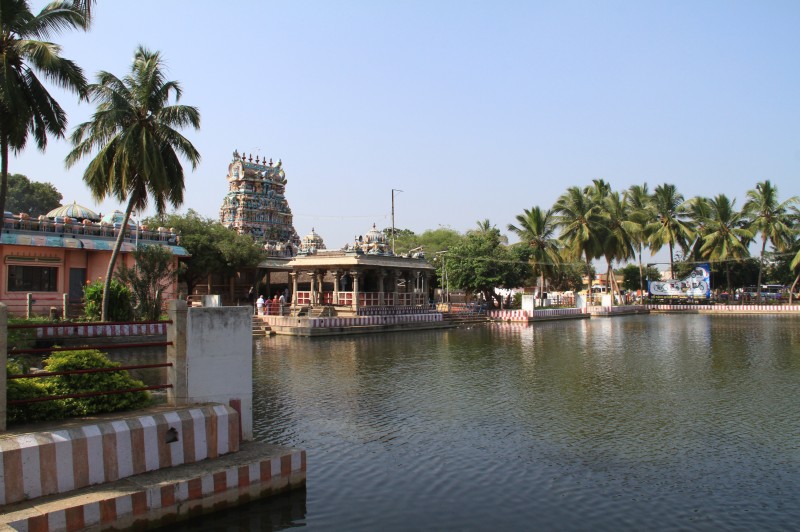
The Sacred Tank (Urani Kulam): A beautiful, expansive holy water tank sits right in front of the temple premises, imbuing the atmosphere with deep meditative calm and energetic purity.
Allied Deities: The cave matrix also houses ancient rock-cut shrines dedicated to Lord Shiva (worshipped here as Arjunapureeswarar) and Goddess Katyayani, allowing pilgrims to immerse themselves in a complete spectrum of divine energies.
Vinayaka Chaturthi: This is the flagship festival of the temple, celebrated across 10 glorious days with absolute structural grandeur. On the final day, an enormous, specially prepared traditional sweet offering—a giant Kozhukattai (Modak) made from jaggery and rice—is offered to the Lord in a grand ritualistic feast.