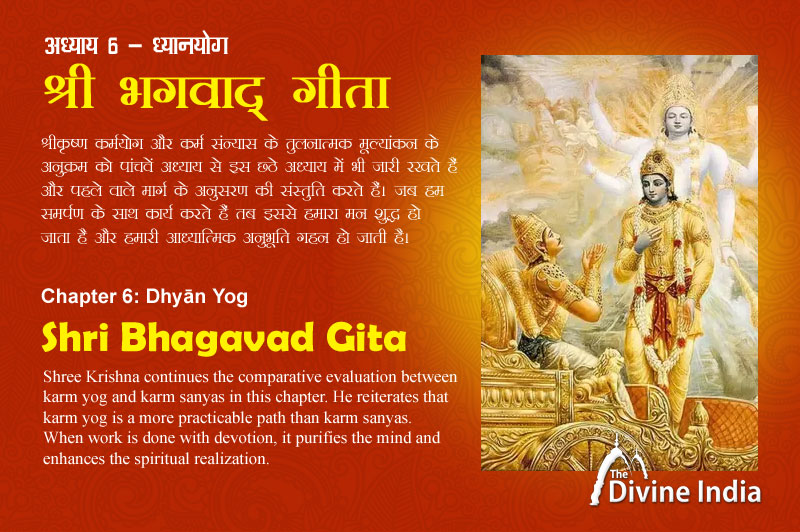
This verse is from the Bhagavad Gita, Chapter 6, Verse 10. It is written in Sanskrit and translates to English as follows:
yogī yuñjīta satatam ātmānaṁ rahasi sthitaḥ |
ekākī yata-chittātmā nirāśhīr aparigrahaḥ || 10 ||
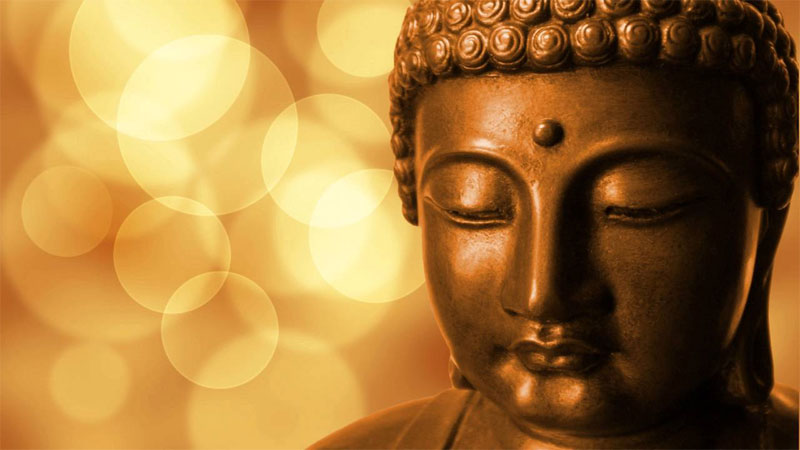
"The yogi (devotee) should constantly engage the mind in meditation, secluded in a solitary place, alone, with a mind and intellect dedicated to God, free from desires and possessions."
Yogī: Yogi (a practitioner of yoga)
Yuñjīta: Should engage or should practice
Satatam: Always or constantly
Ātmānam: Self or soul
Rahasi: In seclusion or solitude
Sthitaḥ: Established or situated
Ekākī: Alone or solitary
Yata-chitta-ātmā: Controlled in mind and self
Nirāśhīḥ: Free from desires
Aparigrahaḥ: Non-possessive or without possessions