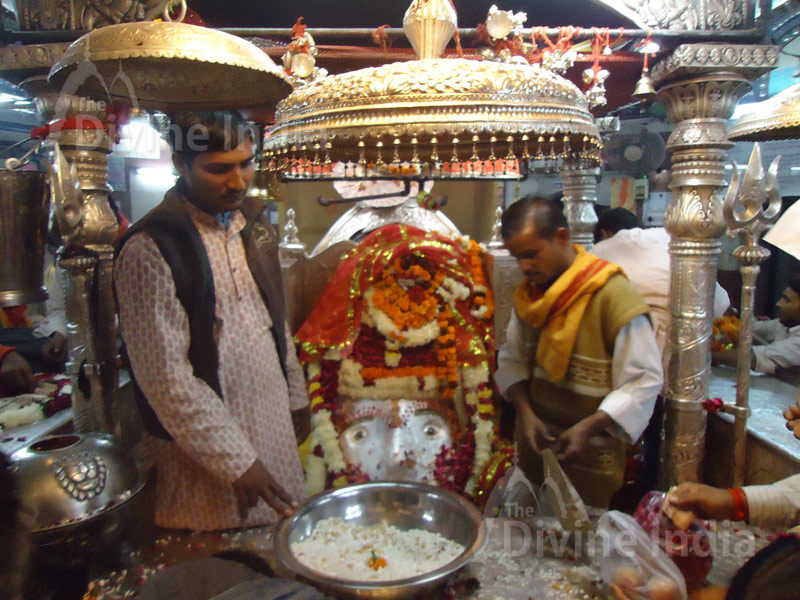
Located in South Delhi near the famous Lotus Temple, the Kalkaji Temple (also known as Kalka Mandir) is one of the oldest, most revered, and highly visited Hindu shrines in India's capital. Dedicated to Goddess Kali—a fierce and powerful manifestation of Goddess Durga—this historic temple is a major spiritual hub that draws millions of devotees, tourists, and seekers throughout the year.
Widely known as Jayanti Peeth or Manokamna Siddha Peeth (the shrine where all wishes are fulfilled), the temple holds an unshakeable place in the hearts of Delhiites and pilgrims from all over the country.
While the roots of this temple connect back to ancient times, its structural history has evolved beautifully through the centuries:
The Ancient Foundations: According to local folklore and historic texts, the original shrine dates back thousands of years. It is believed that the Pandavas and Kauravas offered prayers here before the epic Mahabharata war.
18th & 19th Century Upgrades: The foundation of the transition towards the modern structure was laid around 1764 AD. Later, in the mid-19th century, Raja Kedarnath (the treasurer of Emperor Akbar II) made significant renovations and contributions to the temple.
The Modern Marvel: In the early 20th century, thanks to generous contributions from devotees, the temple took its current shape. Today, the main shrine features a unique 8-sided octagonal structure built beautifully using red sandstone, white marble, and black pumice stones (where the black stone beautifully symbolizes the cosmic energy of Goddess Kali).
Inside the octagonal complex, the main sanctum sanctorum houses the deity of Goddess Kali, uniquely represented in the form of a sacred Kalash (pot) of divine nectar, covered with a stone canopy and silver plates.
Apart from the main deity, the sprawling temple complex houses several smaller, beautiful shrines dedicated to other Hindu deities, including:
Lord Shiva and Lord Hanuman
Goddess Durga (in her various forms)
Various other local deities, creating a complete spiritual ecosystem within the complex.
The spiritual origins of the temple are deeply rooted in the Puranas. According to Hindu mythology, during the ancient times, the deities (Devtas) were heavily troubled by tyrannical demons. Seeking a solution, they approached Lord Brahma, who advised them to seek refuge in Mother Parvati.
Pleased by the intense prayers, rituals, and penance performed by the Devtas and Lord Brahma, Goddess Parvati manifested herself at this very site as Goddess Kali. She slaughtered the demons, saved the cosmos, and chose to permanently settle here to protect her devotees. Centuries later, during the reign of King Yudhishthira, Lord Krishna and the Pandavas famously worshiped here to seek victory.
While the temple stays busy year-round, the energy scales to a whole new level during the Navratri festival (celebrated twice a year). A massive, vibrant fair (Mela) is organized around the hillock. The entire temple is breathtakingly decorated with thousands of lights and fresh flowers, turning it into a spectacular sight.
Kalkaji Temple is universally popular for children's Mundan Sanskar (the traditional first haircut or Bal Utarna ceremony). Devotees from far and wide bring their infants here to perform this ritual, believing that chopping off the birth-hair at the feet of Maa Kali protects the child from evil eyes. The temple facilitates this ceremony daily between 06:00 AM and 10:00 PM.
| Feature | Details |
| Complete Address | Near Kalkaji Mandir Metro Station, Ma Anandmayee Marg, NSIC Estate, Block 9, Kalkaji, New Delhi, Delhi 110019, India. |
| Nearest Metro Station | Kalkaji Mandir Metro Station (Interchange for Violet and Magenta Lines) — nearly 500 meters away from the temple. |
The temple remains open for devotees during the following intervals daily:
Morning Session: 04:00 AM to 11:30 AM
Afternoon Session: 12:00 Noon to 03:00 PM
Evening Session: 04:00 PM to 11:30 PM
Note: The temple doors remain briefly closed between 11:30 AM to 12:00 Noon and 03:00 PM to 04:00 PM for cleaning and bhog rituals.
The divine Aarti at Kalka Mandir changes slightly depending on the season:
Morning Aarti: 05:00 AM to 06:30 AM
Evening Aarti: 07:00 PM to 08:30 PM
Morning Aarti: 06:00 AM to 07:30 AM
Evening Aarti: 06:30 PM to 08:00 PM
To ensure smooth operations, crowd management, and ongoing infrastructural upgrades, the structured workflow and security of the shrine are closely handled by the Shri Kalkaji Temple Manager Reform Committee (Reg.) along with appointed court administrators, ensuring a peaceful experience for every visitor.
Kalkaji Temple is world-famous as a highly revered Manokamna Siddha Peeth (a shrine where wishes are fulfilled). Dedicated to Goddess Kali, it is one of the oldest shrines in Delhi, dating back to the Mahabharata era, and is uniquely known for its ancient history, grand Navratri festivals, and traditional child-shaving (Mundan) ceremonies.
Devotees can get their children's Mundan (first haircut ritual) done at the temple complex daily between 06:00 AM and 10:00 PM.
Yes, Kalkaji Temple is located right across the street from the famous Lotus Temple in South Delhi. Both major attractions are within walking distance of each other.
The Kalkaji Mandir Metro Station (an interchange station for the Violet Line and Magenta Line) is the nearest metro station, situated just 500 meters away from the temple entrance.