When we think of spiritual hubs in Uttar Pradesh, cities like Varanasi, Ayodhya, and Mathura naturally dominate our minds. However, tucked away quietly on the crescent-shaped banks of the Yamuna River lies Bateshwar, an ancient temple town that holds an incredible architectural and spiritual secret. Known as Bateshwar Nath Dham, this mystical place is home to a spectacular complex of 101 Shiva temples lined up consecutively along the river ghats.
Located about 70 km from Agra, Bateshwar is not just a pilgrimage site; it is a timeless journey into India's deep-rooted spiritual, historical, and cultural heritage.
Bateshwar derives its name from Vateshnath, one of the many names of Lord Shiva. The town is deeply tied to Hindu mythology and find mentions in ancient scriptures like the Matsya Purana.
Unlike most places where the Yamuna flows straight, at Bateshwar, the river takes a unique, sharp U-turn (crescent shape). Spiritually, rivers flowing in a crescent shape are considered immensely auspicious. It is believed that taking a holy dip here washes away lifetimes of karmic burdens.
A fascinating local folklore associated with the main Bateshwar Nath temple involves two ancient kings who betrothed their unborn children to each other, promising a marriage. However, both queens gave birth to daughters. Fearing a war and breach of trust, one king hid his daughter's gender and raised her as a prince. When the wedding day approached, the princess, consumed by guilt, threw herself into the Yamuna at Bateshwar to end her life. Legend has it that Lord Shiva intervened, and by his divine grace, she emerged from the waters transformed into a young man, saving both kingdoms.
The defining feature of Bateshwar is its breathtaking riverfront. Built predominantly during the Maratha rule between the 17th and 18th centuries, the ghats feature a continuous wall of white-washed shrines dedicated to Lord Shiva.
The Visual Splendor: Standing at one end of the ghat, looking down the line of dozens of identical and semi-identical temple spires (Shikhars) reflecting in the Yamuna, is a sight that rivals the ghats of Varanasi.
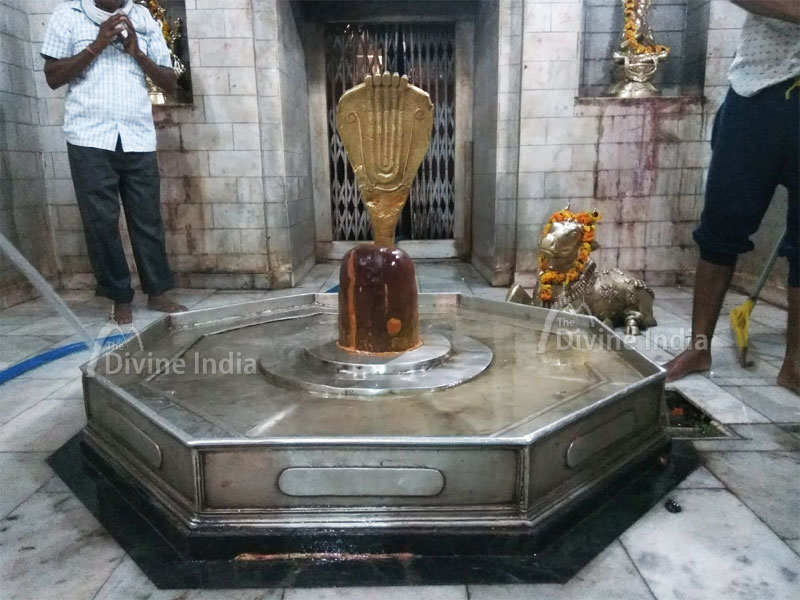
The Main Shrine: The primary temple houses a magnificent Shivling visited by thousands of devotees daily, especially during the auspicious month of Shravan and Maha Shivratri.
Apart from its religious identity, Bateshwar holds immense historical value for modern India:
Jain Connection (Sauripur): Just a couple of kilometers away is Sauripur, which is celebrated as the birthplace of the 22nd Jain Tirthankara, Lord Neminath. This makes the entire region a unique confluence of Shaivism and Jainism.
Birthplace of Atal Bihari Vajpayee: Bateshwar is the ancestral village of India’s beloved former Prime Minister, Late Shri Atal Bihari Vajpayee. His connection to this soil adds a layer of contemporary historical pride to the town.
If you plan to visit or write about Bateshwar, mentioning its annual fair is mandatory. For centuries, Bateshwar has hosted one of the largest Cattle Fairs in Northern India, coinciding with the Kartik Purnima festival (usually in October/November).
The fair attracts traders, sadhus, and villagers from across Rajasthan, Madhya Pradesh, and Uttar Pradesh. Hundreds of camels, horses, and cattle are traded here against the backdrop of religious festivities, creating a vibrant photographer's paradise.
Bateshwar Nath Temple is located in Bateshwar town, about 70 km from Agra district in Uttar Pradesh. Its main specialty is the majestic complex of 101 ancient Shiva temples lined up consecutively along the Yamuna river bank.
The historic Bateshwar Cattle Fair is held every year on the auspicious occasion of Kartik Purnima (usually in October or November) and is one of the largest livestock fairs in Northern India.
Bateshwar is the ancestral village of India's former Prime Minister, the late Shri Atal Bihari Vajpayee. Additionally, the nearby Sauripur is the birthplace of the 22nd Jain Tirthankara, Lord Neminath.