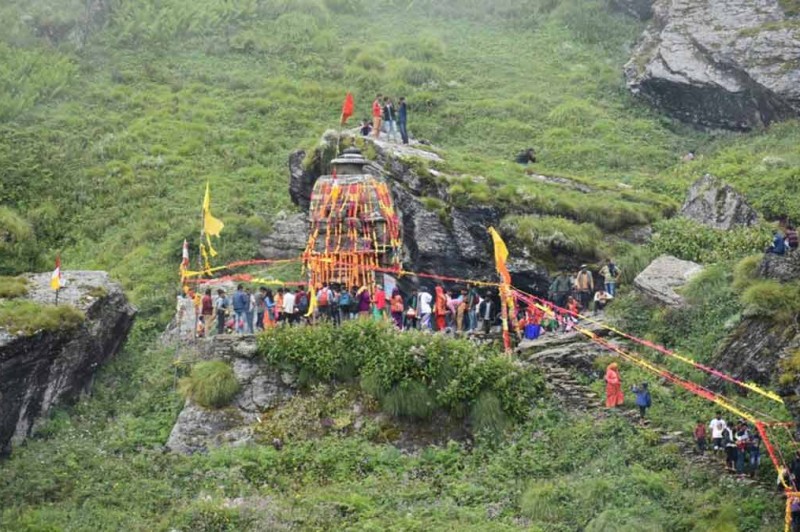
Hidden in the Himalayan valleys of Uttarakhand, countless mysterious temples symbolize the wonderful confluence of faith and nature. One of these is the Bansi Narayan Temple, located in the Urgam Valley of Chamoli district. This ancient 8th-century Vaishnavite temple is dedicated to Lord Vishnu (in the form of Krishna) and is renowned for its unique traditions. The temple's doors open only once a year, on the day of Raksha Bandhan, when devotees tie Rakhi to Lord Narayana. If you are fond of religious pilgrimage and trekking, this place will prove to be an unforgettable experience.
Location and Significance
Bansi Narayan Temple is located in the Urgam Valley, which falls under the Chamoli district. The temple is nestled in a Bugyal (Himalayan grassland) at an altitude of approximately 3600 meters (11,800 feet) above sea level. The surrounding area offers panoramic views of Himalayan peaks like Nanda Devi, Trishul, and Nanda Ghunti, while dense oak and rhododendron forests surround it. There is no human settlement around the temple, making it even more peaceful.
The temple's significance lies in its mythology and unique tradition. It is located just 12 km from Kalpeshwar, the last temple of the Panch Kedars, and is an important stop on the Char Dham Yatra route. Locals believe that Lord Krishna plays his flute (Bansuri) here, the sound of which can be heard by true devotees. The temple is also famous for adventure trekking, camping, pilgrimage, and nature lovers.
The temple's history is deeply intertwined with Hindu mythology. According to legend, when the demon king Bali defeated the gods and took control of the earth, Lord Vishnu assumed the incarnation of Vamana. He measured the universe in three steps and placed the third step on Bali's head, sending him to the underworld. Bali asked the Lord for protection, and Vishnu became his gatekeeper. Goddess Lakshmi consulted Devarshi Narada, who suggested tying a sacred thread to Bali on Shravan Purnima. This brought Vishnu back to earth.
It is believed that the Bansi Narayan Temple is the site where Lord Narayana emerged from the netherworld. It is also associated with the Pandavas' exile. The temple dates back to the 8th century and is a single structure. According to local legend, Devarshi Narada worships here 364 days a year, while humans are allowed entry only on Raksha Bandhan.
The temple's worship rituals are simple yet emotional. The doors open on Raksha Bandhan (Shravan Purnima), when devotees arrive early in the morning to bathe the four-armed idol of Lord Vishnu, offer butter, and tie a rakhi. The temple houses idols of Lord Narayana, Shiva, Ganesha, and the forest goddess. The Jakh priests from Kalkoth village conduct the puja.
The highlight of the festival is the Raksha Bandhan Fair, where women tie a Rakhi to the deity, symbolizing the bond between brother and sister. Every household in Kalkoth donates butter, which is used to prepare Prasad. This day is filled with devotion, culture, and Himalayan folk dances. The temple remains closed throughout the year, but trekkers can visit.
The Bansi Narayan Temple, located in the heart of the Urgam Valley, is connected to many other sites. The nearest Kalpeshwar Mahadev (the last of the Panch Kedars) is just 12 km away. The trek route includes ancient sites such as the Uruba Rishi Temple, Bhagwati Devi Temple, and Chetarpal Temple. The valley's Bugyals, Nanda Devi Sanctuary, and Himalayan peaks attract trekkers. The journey to Badrinath Dham is also easy from Joshimath. Nature lovers can enjoy bird watching and camping here.
conclusion
The Bansi Narayan Temple is not only a center of religious faith but also a living testimony to the mysterious culture and mythology of the Himalayas. The sight here on Raksha Bandhan evokes a wave of devotion. If you're planning a trip to Uttarakhand, be sure to include this unique temple on your list. Jai Lord Narayan!